





Turboplex Classifier ATP
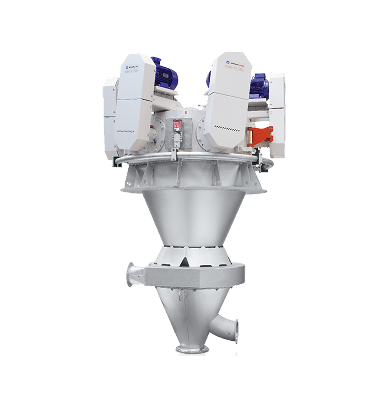
Single-wheel or multi-wheel air classifier for ultrafine classifying operations Superfine powders in the fineness range d97 = 5 to 10 µm; with the NG model, finenesses of d97 = 2 µm (d50 = 0.3 µm) are possible Spatter-grain-free operation over the entire separation range Integrated coarse material classifier to increase the cut point
Principle of Operation
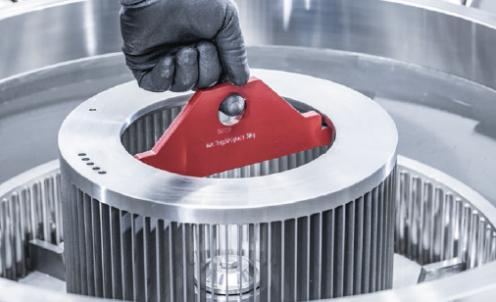
After entering the machine, the classifying air flows through the classifying wheel in centripetal direction. In the process, the classifying wheel extracts the fines from the feed material and conveys them to the fines discharge. The coarse material rejected by the classifying wheel gravitates downwards. The coarse material exits the classifier, it is rinsed again intensively by air to remove the remaining fines. This results in an extremely clean coarse fraction.
The product is fed either via a rotary valve or in the case of an air-flow classifier, entrained in the classifying air. Product fineness is controlled by adjustment of the classifier wheel speed using a frequency converter. The horizontal arrangement of the classifying wheel means that even "difficult" products can be processed with no problem.
Features
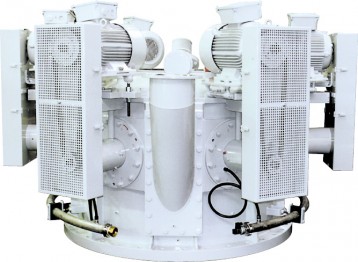
There is hardly another type of classifier that is so well adapted to the demands of practical operation as the Turboplex ultrafine classifier:
The simple and robust design reduces costs for maintenance and servicing
The horizontal arrangement of the classifying wheel reduces wear even with abrasive products and guarantees a long service life
If processing extremely abrasive products, a wear-protection lining prevents excessive wear
Modest space requirement
High fines yield
Sharp top size limitation
Stable operation even if the feed rate fluctuates
Long service life
Coating formation prevented, e.g. when classifying CaCO3
Rinsing gap easy to adjust
Narrow rinsing gap possible
Vibration-free
Features
30% -- 50% less energy requirement in comparison with the standard Turboplex classifier.
Classification down to d50 = 0.5 µm
High fines yield
Tungsten carbide wear protection
Easy upgrade -- conversion of existing machines to ATP-NG design can be achieved by simply exchanging the classifying wheel and drive unit.
Specifications
| Parameter | Scale up factor (-) | Motor | Wheel speed (rpm) | Air volume (m³/h) | Cut point d₉₇ (µm) | Product capacity d₉₇ = 8µm (t/h) | Product capacity d₉₇ = 20µm (t/h) | Product capacity d₉₇ =45µm (t/h) |
|---|---|---|---|---|---|---|---|---|
| 100 | 0.25 | 4 | 11000 | 300 | 4~100 | 0.035 | 0.07 | 0.1 |
| 200 | 1 | 5.5 | 6000 | 1200 | 5~120 | 0.14 | 0.28 | 0.2 |
| 315 | 2.5 | 11 | 4000 | 3000 | 6~150 | 0.35 | 0.70 | 0.4 |
| 400 | 4 | 11 | 3150 | 4800 | 7~150 | 0.56 | 1.12 | 1.6 |
| 500 | 6.25 | 22 | 2400 | 7500 | 8~150 | 0.80 | 1.75 | 2.5 |
| 630 | 10 | 30 | 2000 | 12000 | 9~200 | - | 2.8 | 4.0 |
| 750 | 14 | 37 | 1600 | 17000 | 10~200 | - | 3.9 | 5.6 |
| 1000 | 25 | 45 | 1200 | 30000 | 12~200 | - | 6.5 | 9.5 |
experimental verification
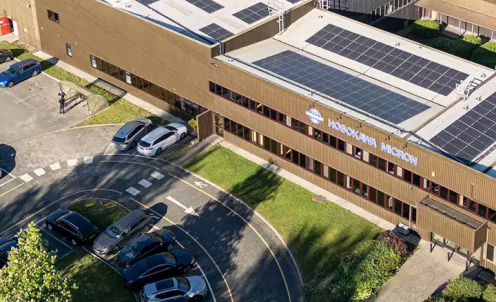
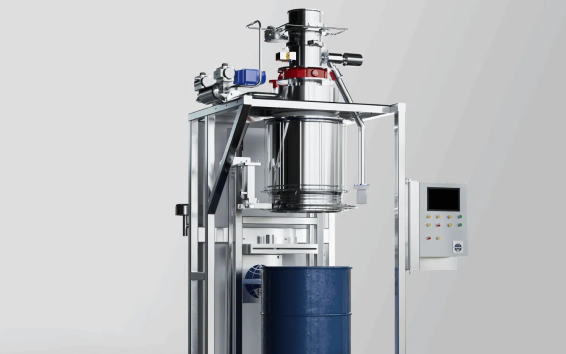
Before investing in new equipment, please conduct tests on the materials to be used at the Hosokawa Testing and Process Development Center based on actual production conditions. Our experienced experts will assist you in determining the most effective mixing, granulation, or drying processes, helping you transition from laboratory trials to a comprehensive production testing phase. Whether you need to test the performance of a single machine or evaluate the entire production line, we can provide tailored testing services and process optimization solutions to ensure reliable system operation and excellent performance.
More

Contact Us
Feel free to contact us for any inquiries.