







POM
Polyoxymethylene (POM) is a highly crystalline thermoplastic engineering plastic. It features high stiffness, a low friction coefficient, excellent dimensional stability and chemical resistance. It also delivers low frictional resistance, high heat deflection temperature, outstanding wear resistance, fatigue resistance, arc resistance and insulating properties, coupled with low water absorption, high dielectric strength and resistance to chemical attack. It serves as a core base material for precision machinery and instrumentation engineering. Its milling process imposes stringent requirements on equipment in terms of grinding accuracy, process adaptability, sealing and pressure resistance, as well as energy consumption control, which directly determine the quality of finished particles and the performance of downstream applications.
With outstanding comprehensive mechanical properties, POM is widely used in the manufacturing of high-precision components:
Precision machinery industry: gears, cam controllers, sliding bushings, feed rollers, spring elements;
Instrument engineering sector: valve balls, quick fasteners, various precision transmission and connection parts;
Industrial accessories: wear-resistant seals, structural supports and other components demanding high strength, precision and wear resistance.
Process
POM presents four major challenges commonly encountered in the industry during dry and wet milling processing:
Difficulties in milling accuracy and particle size control: Due to POM’s high rigidity, conventional equipment produces a broad particle size distribution after grinding, often leaving coarse powder residues or excessive fine fractions, failing to meet the particle uniformity requirements for precision components.
High energy consumption and low milling efficiency: Standard milling equipment consumes excessive energy when processing high-hardness POM materials, and its output cannot match the demands of large-scale industrial production.
Insufficient process adaptability: POM has two mainstream processing routes, dry and wet milling. Traditional machines cannot support both processes and offer limited customization.
Weaknesses in sealing and pressure resistance for wet processing: In wet milling applications, inadequate sealing and pressure resistance may cause material leakage and unstable process pressure, compromising production safety and material purity.
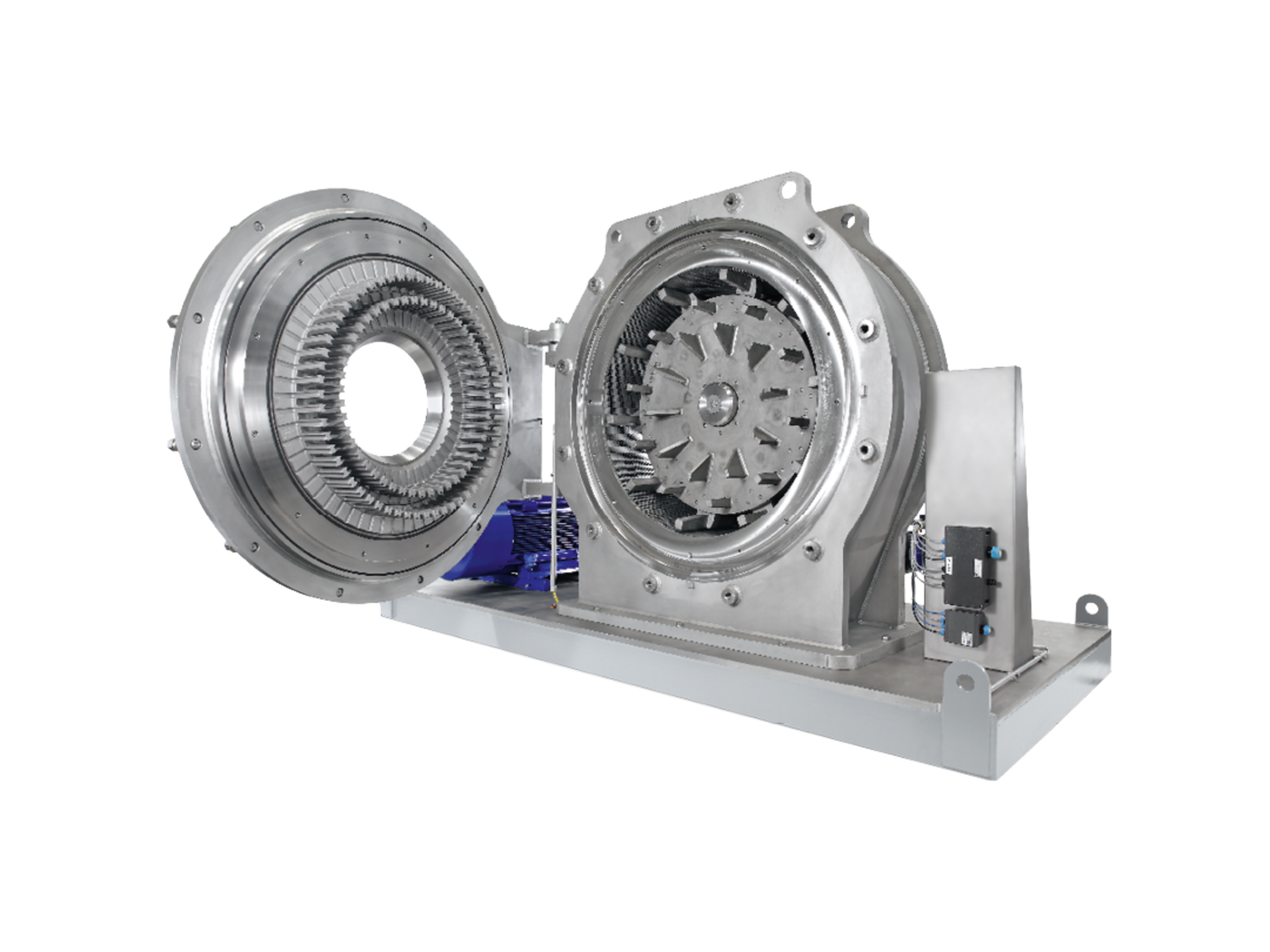
Hosokawa Micron Solution: Hosokawa Alpine Ultraplex® UPZ Fine Impact Mill
我将优化译文,贴合外企工业宣传正式文风,句式工整、术语精准,适配演讲/画册/PPT使用: To address the core pain points in POM milling processing, Hosokawa Alpine presents the UPZ Fine Impact Mill, an integrated customizable milling solution combining dry and wet processes to adapt to all POM processing scenarios:
Full dual-process coverage: Capable of both dry and wet milling for POM, fully meeting the requirements of diverse production processes and application scenarios.
Precise particle size control: Achieves accurate regulation of finished particle sizes with zero coarse powder residue and qualified fine powder content.
Optimized design for wet processing: Wet-type units adopt specialized bearing seals and air seal structures, feature chambers resistant to 0.3 bar overpressure, and are constructed with certified special structural materials to eliminate leakage and ensure consistent process stability.
Industrial-scale production capacity: Large-scale models (1000UPZ/1400UPZ) support mass production with a throughput range of 800kg/h to 10t/h, perfectly suited for continuous industrial production.
Core Advantages of UPZ Fine Impact Mill
Low Energy Consumption & Gentle Milling: Optimized milling structure tailored to POM properties delivers gentle grinding without overheating, cutting production costs.
Flexible Selection of Multiple Grinding Elements: Multiple configurations including pin discs, hammer discs, plate hammers and swing hammers. Selection can be made flexibly according to target POM fineness and feed form to suit various processing requirements.
High Performance for Wet Processing: Special bearing seals, air seals and pressure-resistant design enable stable operation under 0.3 bar overpressure. Special materials provide corrosion resistance and leak-tight performance to ensure safe wet processing.
Precise Particle Size Control: Uniform particle size distribution of finished product, achieving 97% <1000 μm.
High Throughput for Industrial Production: The 1400UPZ model reaches a throughput of 5–10 t/h, suitable for large-volume continuous POM production while balancing fineness and capacity.
Safety & Compliance: Available with PSR explosion protection design (up to 10 bar) and inert gas blanketing, complying with ATEX and other industrial safety standards for safer operation in chemical environments.
Easy Maintenance & High Reliability: Robust equipment construction with wear-resistant critical components. Hinged machine doors facilitate cleaning and maintenance, greatly reducing downtime.
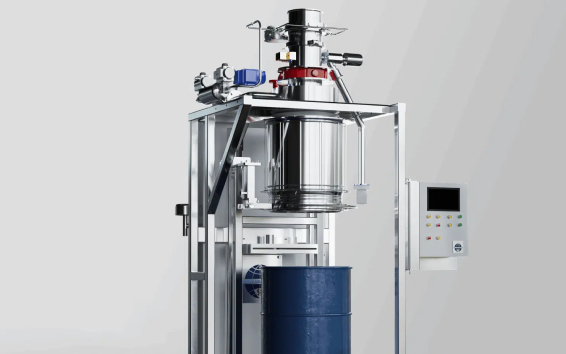
Experimental Verification
Prior to investing in new equipment, you may test your materials under real production conditions at Hosokawa’s Test & Process Development Center. Our experienced specialists will assist you in identifying the most efficient mixing, granulation or drying processes, supporting your transition from laboratory trials to full-scale production testing.
Whether you need to verify the performance of a single machine or evaluate an entire production line, we deliver customized testing services and process optimization solutions to guarantee reliable system operation and outstanding performance.
MoreDownloads


Contact Us
Feel free to contact us for any inquiries.