






Rice Powder
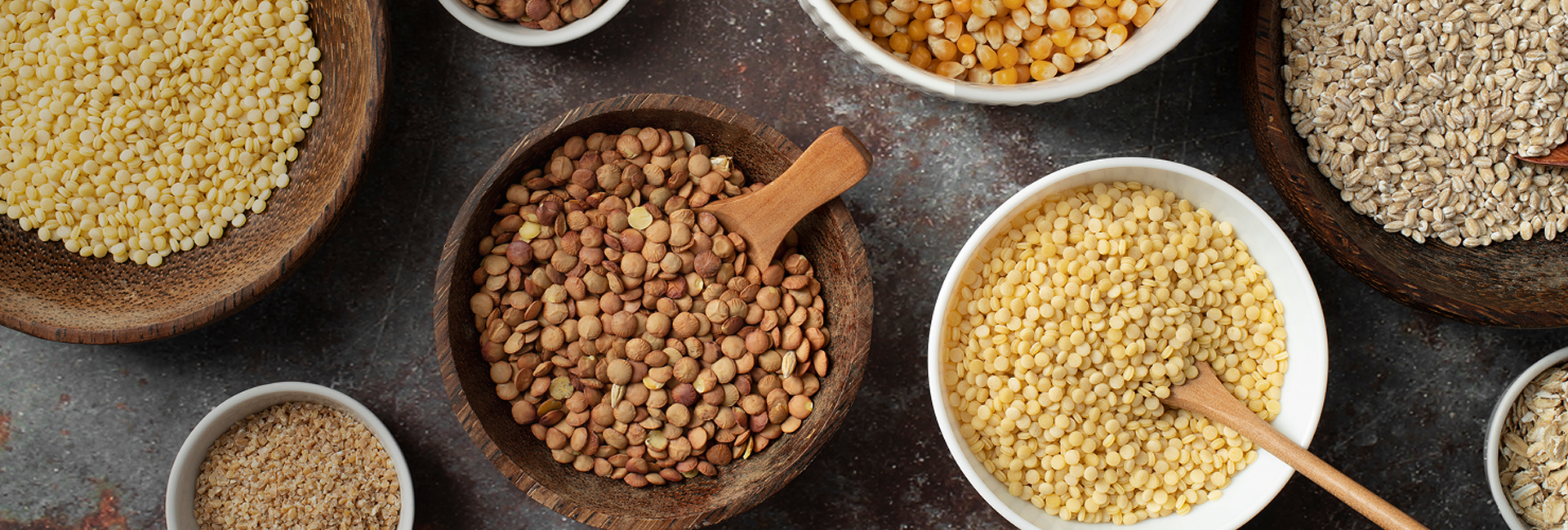
Rice powder is milled powder of ordinary rice or sweet rice. There are various types of rice powder products, and they are used for rice cakes, dumplings and confectionery, as with wheat flour. It is also used for noodles and bread, playing a role as an alternatives to wheat flour for allergy purposes. There are two types: non-heat-treated Beta type (raw rice product) and heat-treated Alpha type (gelatinized product). The beta type of ordinary rice is used for rice powder bread.

Demand from industry
To produce rice powder, there are 3 milling types: roller mill, stamp mill and impact mill. There are appropriate processes for each product type, such as High and White Powder, High Powder, and wheat flour replacer. For each final product such as rice cakes or dumplings, the product quality is affected by particle size, shape, and moisture content of rice powder. In order to protect the starch fraction from damage during milling, it is very important to dip rice into water to let it absorb moisture prior to the milling process. This treatment suppresses the temperature rise of the product. For the wheat flour replacer, a finer product (around 40 μm) than conventional rice products (around 100 μm) is required. It tends to increase the demand for impact mills.
High and White powder (Roller mill)
water absorption – drying
milling – sieving
High powder (Stamp mill)
water absorption – dewatering – milling – sieving – fluid bed drying
Wheat flour replacer (Impact mill)
water absorption – dewatering – milling drying
Problem
A roller mill is suitable for mass production, but requires the use of a sieve for particle size control. A stamp mill can be operated at low temperature to minimize heat damage, but the particle size control is difficult. The impact milling system is compact and easy to control the particle size. Another advantage of impact milling could be the combination with a drying operation in one machine.
Modern milling system
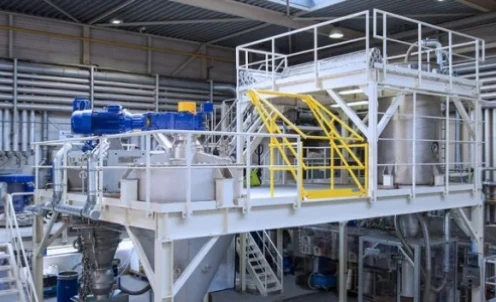
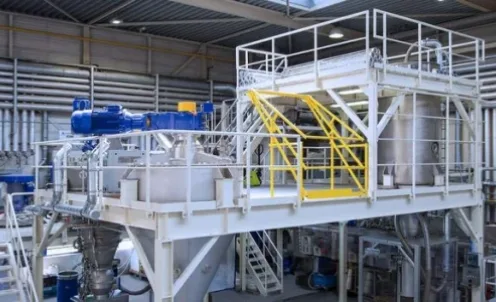
For fine grinding of rice, our recommendation is the ACM Pulverizer. Compared to multiple roller mills, the structure of the milling rotor of the ACM is simpler and easier to clean up. It can be scaled up to a production capacity of more than 1t/h. It has an advantage in terms of scale merit (low energy consumption) for large systems compared to multiple rotor type milling.
In addition, it grinds the rice with little damage to starch due to milling at the minimum necessary impact. By blowing hot air directly into the mill, milling and drying processes can be conducted at the same time. A simple and smooth interior structure enables continuous processing without adhesion and results in improved productivity by saving labor on cleaning. It also suppresses bacterial growth in the system. As the high-performance-classifying rotor gives a steep particle size distribution curve, the product can be used for high-quality products such as bread or confectionery.
As the high performance-classifying rotor gives steep particle size distribution curve, the product can be applied for the high quality product such as bread or confectionery.


Contact Us
Feel free to contact us for any inquiries.