





Starch
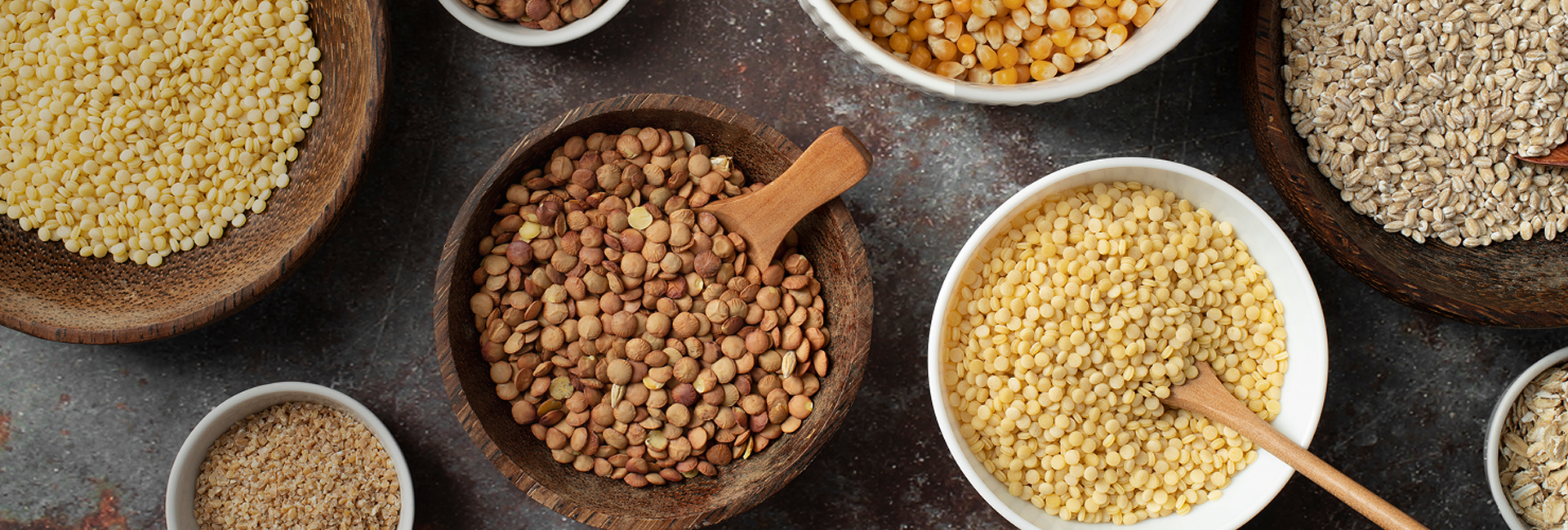
Starch is a polysaccharide and is the most important energy source among all carbohydrates and is contained in high concentrations in grains and tuber crops. It is commonly used in sweeteners, beer, processed seafood products, adhesives and many other products. Raw starch cannot be digested by humans so processing is required to make it suitable for digestion. A large portion of production is saccharified and made into sweeteners, while the remaining portion is processed for food and adhesives. On the other hand, raw starch is used for industrial purposes such as the production of ethanol and paper processing.
Processed starch is used in many food products such as breads, bakery products, pasta, confectionery and meat products. Adding starch increases viscosity, shape keeping stability, moisture holding properties, emulsion stability, gloss, and texture. By various processes, many different processed starches have been developed with different properties.
Starch Powder Production Process
Drying
The starch that has been separated from other materials is dewatered to around 45% moisture content. The wet starch is then dried using a Drymeister system to around 15% moisture content producing dry starch.
Heat treatment
Since starch changes properties due to heat and chemical processes, the process order can affect milling properties and viscosity. The particle size varies with the use of the starch.
Gelatinized starch is used for confectionery, breads, noodles, instant rice, and rice confectionrary. Aged starch is used for cellophane noodles. The starch becomes the raw material for products matching the characteristics of the starch so control of the process conditions is very important.
In the process to increase the functionality of starch, a Turbulizer is used to add water, oil and additives, a Drymeister is used to disperse and dry, a Solidaire is used to heat treat and an ACM Pulverizer is used to mill producing a finely milled product.
Turbulizer
A mixer with a cylindrical vessel and rotating paddles. The material is dispersed and mixed by the rotating paddles. Liquids can be added and heating and cooling can be conducted with a jacket on the vessel. The vessel can be supplied as a split vessel allowing easy cleaning.
Drymeister
A dryer using hot air, dispersion section at the bottom and a classifier at the top. Milling, classification and drying can be conducted at the same time. The wet material is milled, classified, and dried numerous times until the required particle size and moisture content are achieved after which the material is discharged to the collector. Material buildup is minimal and control of particle size and moisture content is easy.
Solidaire
A dryer with a cylindrical jacketed vessel and rotating paddles. The paddles disperse the material and cause it to flow along the interior surface of the vessel. The heat from the vessel is efficiently transferred to the material for drying.
ACM Pulverizer
A specially designed rotating hammer mills the material and the integrated classifier prevents over milling and cleaning is easy.
Wetting / Agglomeration
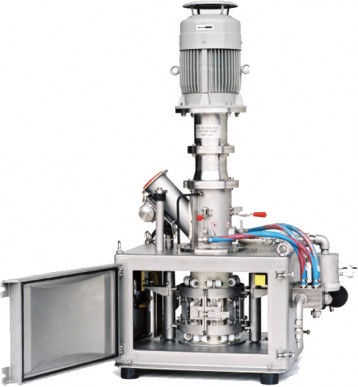
The Flexomix can be used agglomerate starch products to increase solubility and dispersibility. Adding 4% water to starch reduces volume and prevents dust generation.
The Flexomix has a rubber mixing chamber and high speed rotating blades. The turbulence generated by the blades instantly mixes the powder with the liquid injected through the injection nozzles. By adjusting the moisture content, agglomerate with superior dispersion characteristics are produced.
Hosokawa can help to increase the variations of starch products.
Breaking up of starch particles - Glacis
Coating starch with oil - Vitomix
Milling of roasted starch - ACM Pulverizer
Hosokawa can also supply mills for starch byproducts such as dextrin, maltose and glucose.
Vitomix
A mixer that can be used from high to low shear force and is suited for the mixing of oils into starch and the mixing of brittle materials.

Contact Us
Feel free to contact us for any inquiries.